Why Golden Retrievers Never Go Out of Style
A century after their beginnings in the Scottish Highlands, the breed's gentle temperament and golden gleam still wins hearts and graces living rooms.
By Eleanor Vance · August 2026
There is a particular kind of light in late afternoon — the kind that slants through a window and pools on the floor — and into that pool, as if on cue, a golden retriever will settle.
It is hard to say when the golden retriever became less a breed and more an institution. The American Kennel Club has ranked it among the country's most beloved dogs for decades, through every fashion cycle that briefly elevated French bulldogs, doodles of every description, and whatever breed last starred in a streaming series.
Fashions churn. The golden abides.
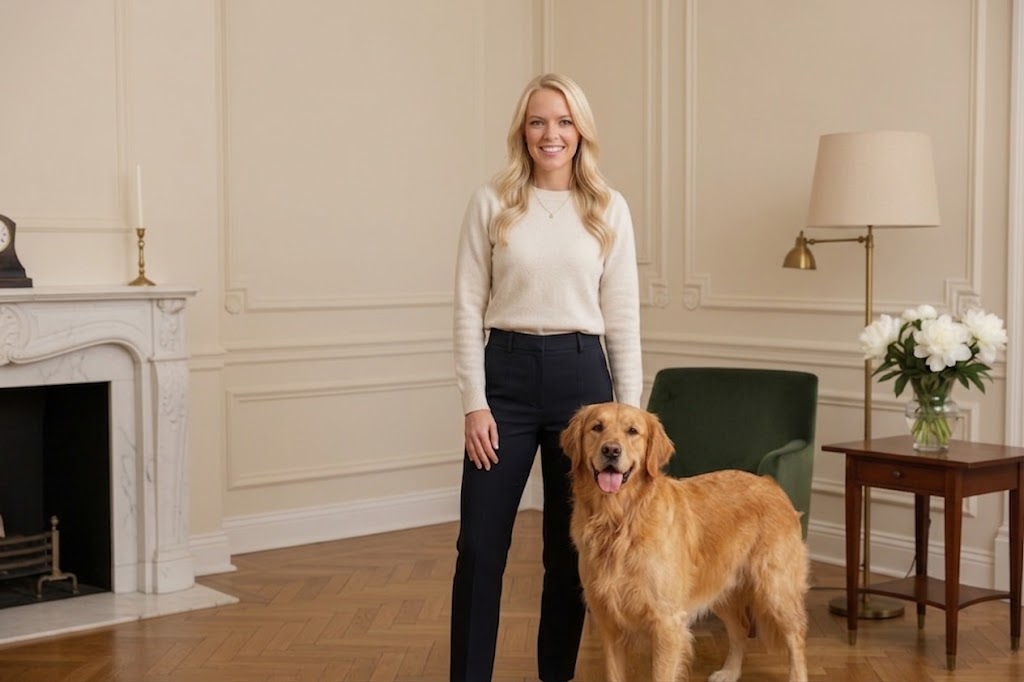
Bred for gentleness
The breed's story begins, improbably, with a Scottish aristocrat. In the 1860s, Dudley Marjoribanks — later Lord Tweedmouth — set out at his Guisachan estate in the Highlands to develop the ideal gundog for the rainy, rugged terrain: a dog that could retrieve waterfowl from cold lochs with a soft mouth and an even softer disposition.
What he produced was something more than a working dog. The golden retriever carried its breeding in its temperament: patient with children, courteous with strangers, devoted without being demanding. The qualities that made it useful in the field made it irresistible in the home.
The family dog, perfected
Ask any veterinarian, trainer, or longtime breeder why the golden endures and you will hear variations on the same theme: the breed is almost aggressively agreeable. It greets toddlers and houseguests with the same wagging conviction. It forgives the clumsy affections of a five-year-old. It waits — mostly — for dinner.
“They're the dog I recommend when a family tells me they've never owned a dog before,” says one breeder we spoke with in Vermont, who has raised goldens for thirty years. “The learning curve is built into the dog. They want to get it right.”
That eagerness has made the breed indispensable beyond the living room: as guide dogs for the blind, as therapy dogs in hospitals and courthouses, as search-and-rescue workers. There is hardly a job that requires steadiness and warmth that a golden has not quietly taken up.
The golden in the frame
It is no accident that the golden retriever is also among the most painted, drawn, and photographed dogs in America. The breed's face — dark, gentle eyes; a coat that catches light the way wheat does — seems designed for portraiture.
Owners rarely stop at one portrait. A golden puppy becomes a golden senior with a silver muzzle, and families find themselves commissioning the second painting before the first has left its place above the mantel. Few breeds inspire that particular loyalty of the frame.
Perhaps that is the final explanation for the breed's staying power. Other dogs are admired. The golden retriever is commemorated.
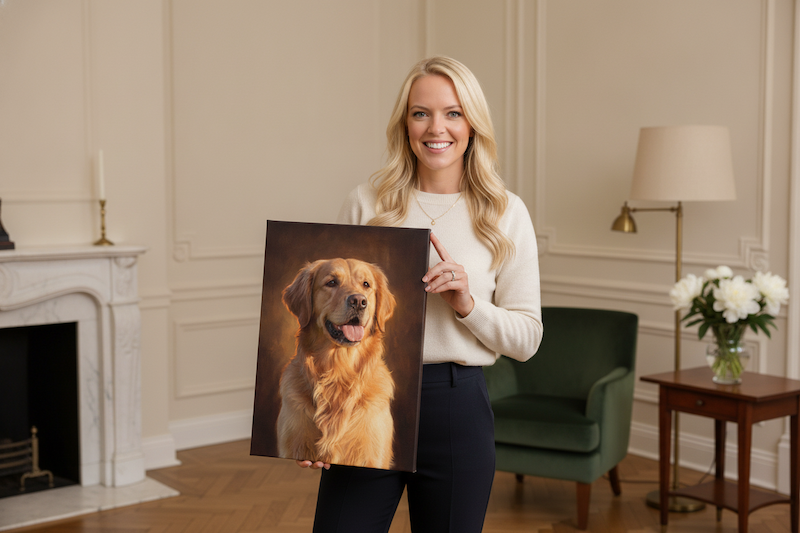
“A golden doesn't just live in your house. It softens it.”